Silence the Hold Music.
26th August 2026

The queue is where customers form their opinion of you. It's also optional.
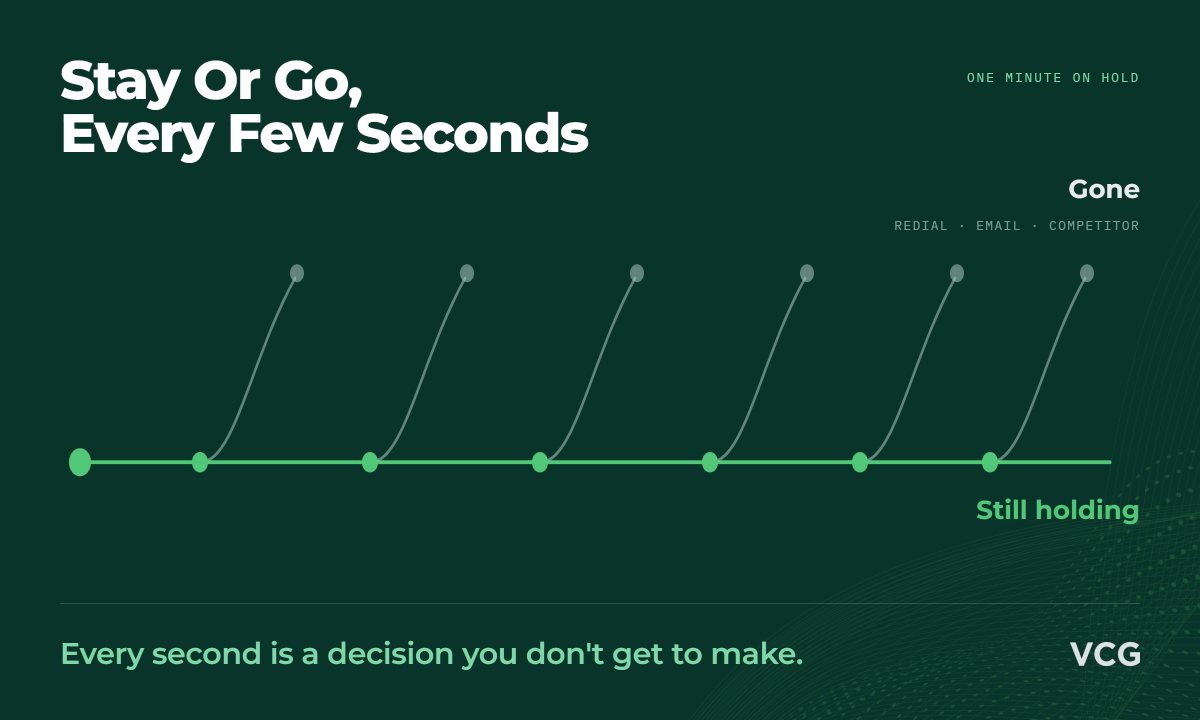
Think about what a queue actually is: a decision, repeated every few seconds, by someone you've never met. Stay or go. Buy or search. Forgive or remember. Hold music is the soundtrack to that decision, and it has never once changed the answer in your favour. Nobody ever bought more because the hold music was good.
The costs are countable, once you look. Abandoned calls that were orders. Redials that double your volume without doubling your customers. The repeat contacts created when someone gives up on the phone and emails instead, so two people handle one question. And the quietest cost: agents who spend the first minute of every conversation apologising for the wait, which is a strange use of your most expensive channel.
A queue is a design choice that customers experience as a verdict.
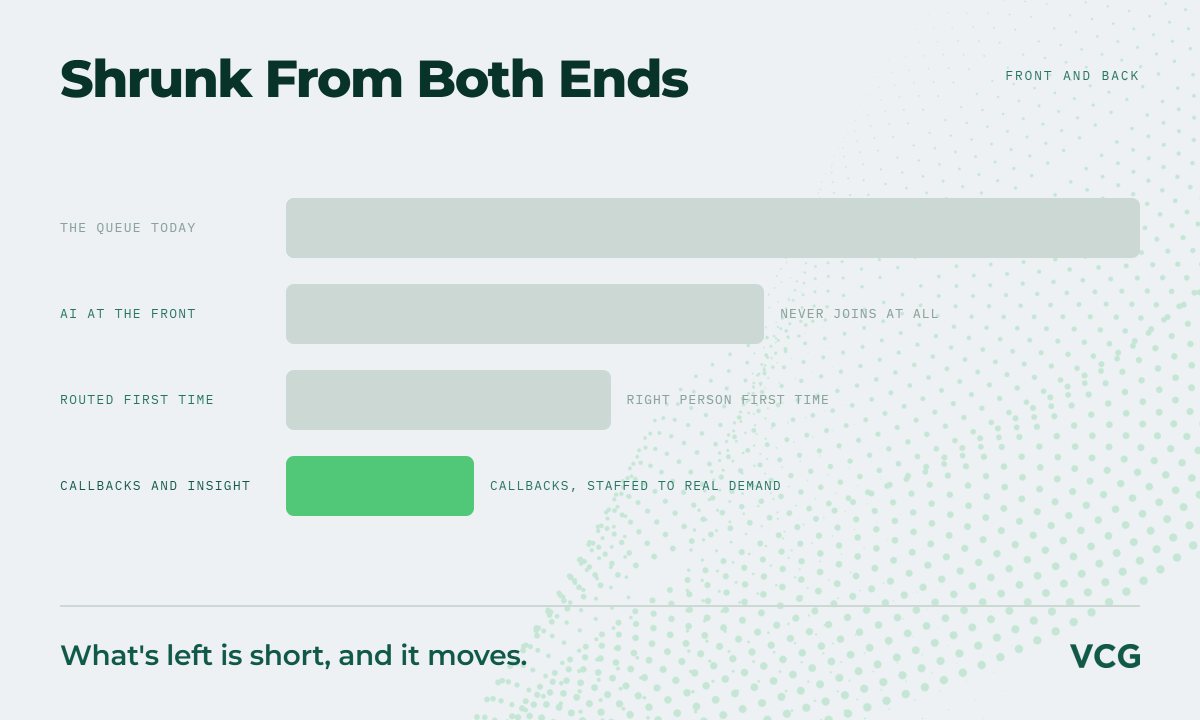
Queues shrink from both ends. At the front, well-trained AI answers the everyday instantly, balances, bookings, opening hours, order status, so a large share of demand never joins the queue at all. What remains is routed to the right person first time, because the second worst thing after waiting is waiting twice. For the moments demand still spikes, call-backs hold the customer's place without holding the customer.
At the back, insight keeps the queue honest. Live dashboards show demand as it moves, so staffing follows reality rather than last year's rota. The demand patterns AI surfaces feed the schedule, and the schedule feeds the experience. Queues stop being weather and become something you manage.
The question for your next operations meeting is simple: what does a minute of waiting cost us, and how many of those minutes did we sell yesterday? If nobody knows, that's the first number worth finding.