From Answering Calls to Managing Experience.

26th August 2026

Customer experience used to be a mood. AI makes it a managed discipline, and the shift starts with measurement, not technology.
Across this series we've followed one thread. Customers changed channels and expect you everywhere. Calls ring out that nobody counts. The unhappiest customers stopped complaining. Your best agent's knowledge lives in one head. Queues form opinions. And underneath it all, an ageing estate charges modern prices for legacy limits. Different symptoms, one condition: the conversations that decide your reputation are running unmeasured and unmanaged.
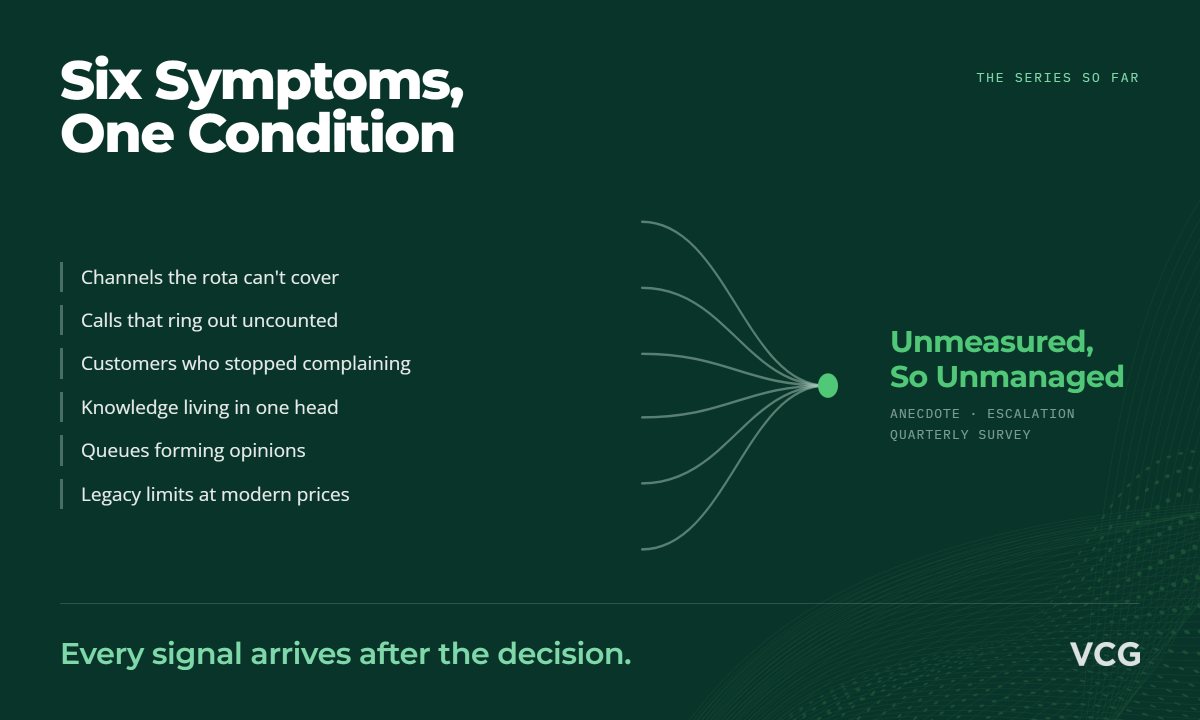
You can't improve what you only hear about late.
That's the whole problem with running service on anecdote, escalation and quarterly surveys: every signal arrives after the customer has already decided. The organisations pulling ahead haven't just bought better tools. They've made experience observable, and then managed what they could finally see. You can't improve what you only hear about late. In practice that means four capabilities working as one. Every channel answered in one place, so nothing strands. AI self-service that answers the everyday instantly and hands over like a colleague, not a dead end. AI beside every agent and supervisor, raising the floor to the ceiling. And insight across every conversation, feeding staffing, coaching and product decisions week on week. Each one feeds the others: that's what makes it a practice rather than a shopping list.
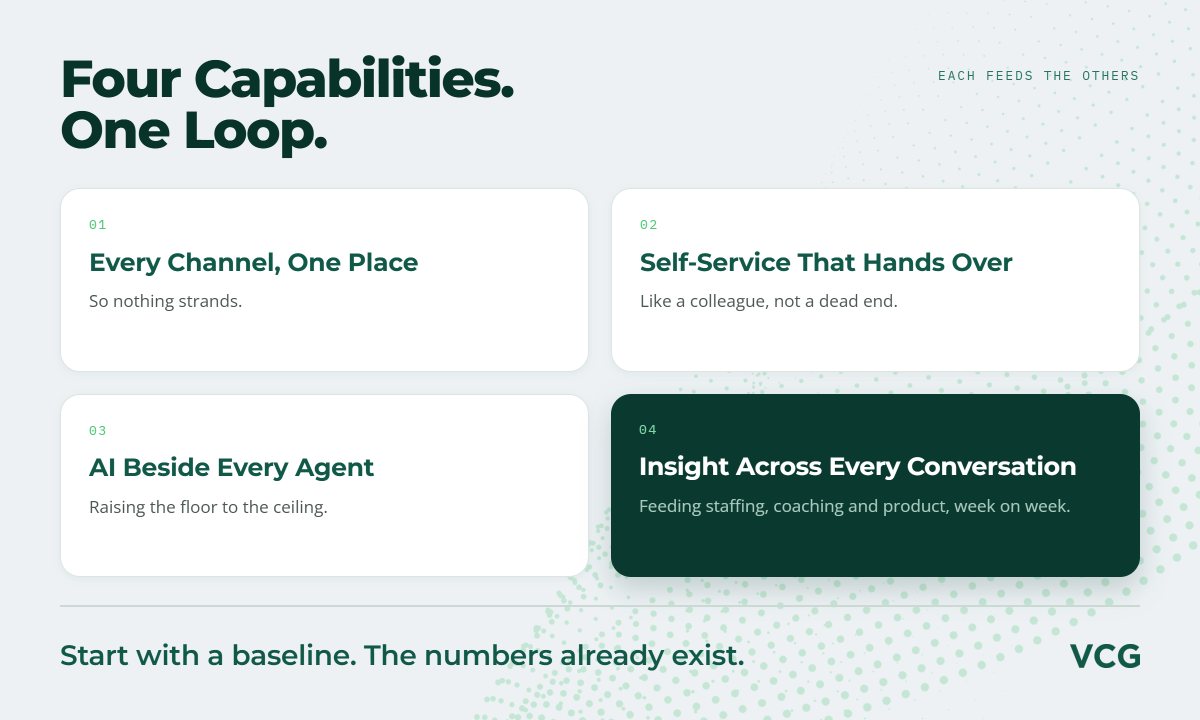
It also means starting from where you are, not from a brochure. Some organisations need their first true customer experience platform. Some need the channels they already serve unified into one view. Some need an ageing phone system moved on, carefully, around sites and numbers and handsets. The right amount is whatever your business needs, and nothing you don't: dependable modern conversations first, more switched on as it earns its place.
Wherever you start, begin the way every managed discipline begins: with a baseline. How customers reach you today, what rings out, what waiting costs, what routine demand would answer itself. Those numbers exist. Most organisations have simply never seen them, and seeing them for the first time is usually the moment this stops being a technology conversation and becomes a business one